
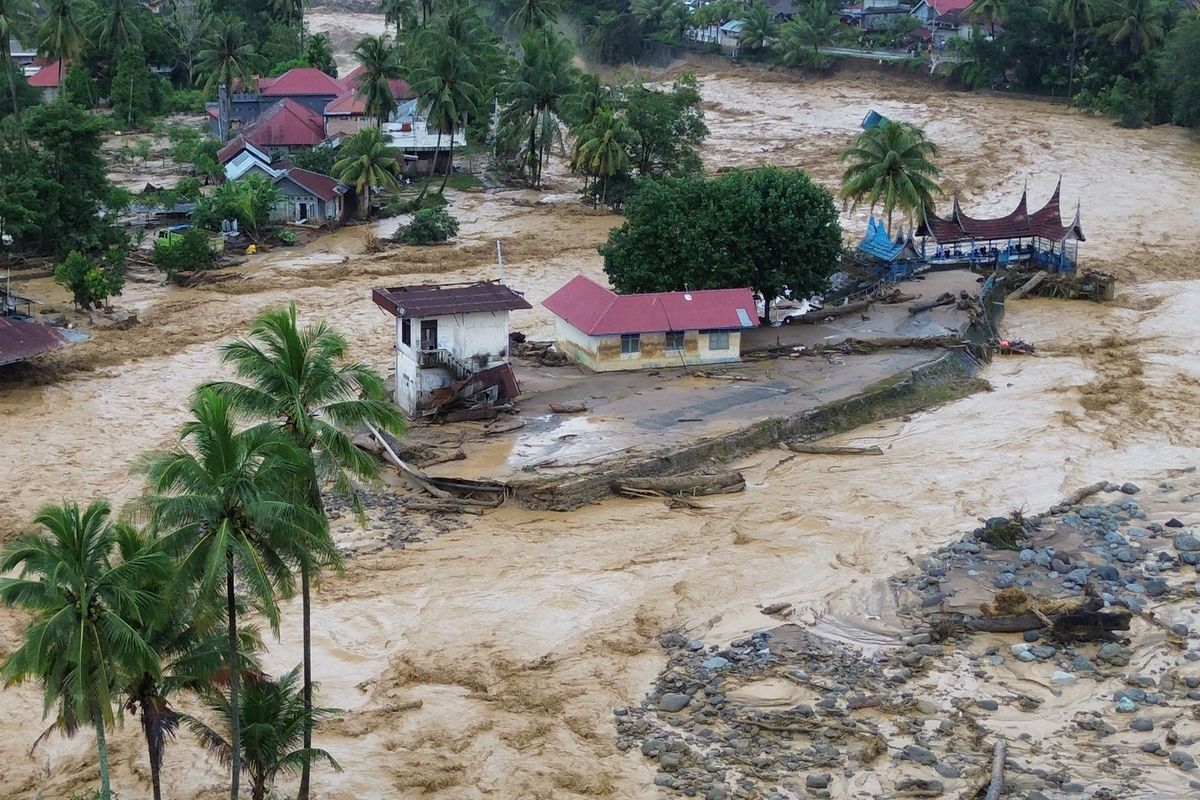
In the past weeks, multiple regions across Sumatra have been struck by a severe wave of disasters: heavy floods, landslides, damaged riverbanks, and the collapse of critical roads connecting rural communities. What started as intense rain escalated into a humanitarian crisis, revealing deep vulnerabilities rooted in environmental degradation.
Meteorological data from recent monitoring show rainfall levels in some areas exceeded 200–250 mm within 24 hours substantially above the usual seasonal patterns. However, heavy rain alone doesn’t fully explain the extent of destruction. Over the past decades, large portions of Sumatra’s natural forest cover have been lost due to deforestation and unsustainable land-use practices. Watershed areas have weakened, riverbeds have silted, and hillsides that once absorbed excess rainwater no longer offer the protection they used to. When the land fails to soak up the rain, runoff increases, rivers swell faster, and slopes become prone to collapse.
The Human Toll: Lives Lost, Homes Washed Away
According to recent provincial reports, the disaster has led to at least 174 confirmed deaths. Dozens remain missing, and many more are displaced. Thousands of families have lost their homes, while farmlands, bridges, and vital infrastructure have been destroyed. In isolated villages, flooding and landslides cut off road access for days, delaying aid delivery and complicating rescue efforts. Clean water and electricity became scarce, increasing risks of waterborne diseases and deepening food insecurity.
These figures are more than statistics, they are communities uprooted, livelihoods shattered, and futures suspended.
Why It Didn’t Have to Be This Bad
The disaster in Sumatra underscores a harsh truth: when natural systems are degraded, environmental hazards become human tragedies. Deforestation, erosion, pollution of river basins, and improper land conversion have stripped the land of its natural resilience. In such conditions, normal events like heavy rain can trigger catastrophic disasters.
This isn’t just a matter of weather, but of ecological entropy where repeated damage over years reduces nature’s ability to protect and regenerate, leaving people exposed.
What Should Change: A Call for Sustainability & Resilience
Disaster responses must go hand in hand with long-term ecological recovery and sound land-use planning. Here are some essential priorities:
- Rehabilitate and protect watershed ecosystems: reforest riverbanks and slopes, restore wetlands, and limit harmful land conversion.
- Ensure proper zoning and land-use regulation: prevent settlements and agriculture expansion in high-risk zones without adequate safeguards.
- Strengthen early-warning and disaster-management systems: equip communities with risk data, evacuation plans, and rapid response capacity.
- Support sustainable livelihoods: invest in agriculture, forestry, and local economy models that value ecological balance over short-term profit.
If we do not address environmental degradation, future disasters will continue to inflict the same or even greater devastation.
Reflection: A Disaster Is More Than Nature’s Force
The tragedies in Sumatra are not isolated. They are part of an emerging pattern where ecological damage, climate change, and social vulnerability intersect.
When nature pushes back, the consequences hit hardest those who already had the least.
Protecting the environment is not only an ecological duty, it is a humanitarian necessity.
This is a moment for reflection, awareness, and collective action: for communities, policymakers, and every individual to understand that safeguarding nature is safeguarding life.